
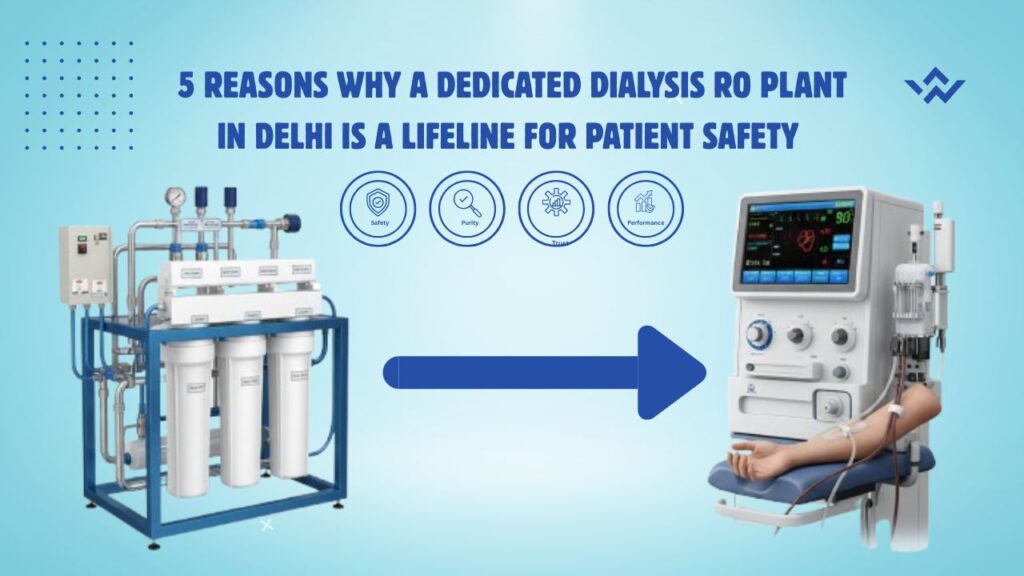
5 Reasons Why a Dedicated Dialysis RO Plant in Delhi is a Lifeline for Patient Safety
When patients going through haemodialysis in Delhi receive a material infusion of water every week as it serves as the main ingredient for the dialysate solution used during the procedure (usually hundreds of litres). Water surrounds the patient’s blood almost completely with the only barrier being a very thin membrane between the two fluids. Therefore, all contaminants present within the dialysate water have the potential to enter the bloodstream of an individual (unless they are eliminated through filtration) in the same manner as contaminants from drinking water (i.e., via the digestive system).
Dialysis patients with renal failure face much higher risks due to exposure to contaminants because their body’s filters aren’t working properly. Thus, a dedicated Dialysis RO Plant in Delhi represents more than just a convenient addition; it is the foundation for the safety and effectiveness of their treatments. The most critical element in making a successful investment in a medical-grade/high-quality Reverse Osmosis (RO) system is that of ensuring that you select an appropriately sized, certified, and warranted unit.
1.Toxic Contaminants are a Non-Starter: Compliance with Worldwide Norms
Water supplied through pipes in Delhi contains numerous minerals/chemicals that may be safe for normal consumption but are extremely hazardous for use during or after haemodialysis. Long-term exposure to toxins like aluminium, copper, fluoride, and chloramines can cause significant health problems.
- The Aluminium can create bone related issues and a major form of neurological disease (Dialysis Dementia).
- The disinfectants most commonly in municipal waters (chlorine) can cause extreme amounts of Haemolysis (Death of red blood cells) to lead to the person’s demise.
Because of the difference in volumetric capacity (e.g., the use of reverse osmosis membranes), a standardised residential or commercial RO system does not provide the same level of purity as a Designed Dialysis RO Plant in Delhi because there are many more steps involved in the creation of an RO plant, including numerous pre-treatments (the use of carbon filters and water softening systems) and two reverse osmosis stages. In addition to these extra steps, the second reverse osmosis stage includes an additional set of membranes that helps to remove the impurities (toxins) to the levels specified by international organisations such as the Association for the Advancement of Medical Instrumentation (AAMI).
2.Biofilm and endotoxin (pyrogen) Protection
The most significant invisible hazard to any water source is biological contamination. The presence of bacteria causes the potential for them to grow and reproduce into the slick surface referred to as biofilm inside the pipe and distribution loop. When the bacteria are killed, they release their contents, known as endotoxins.
In dialysis situations, some of the endotoxin particles can penetrate the semi-permeable membrane used to separate the patient’s blood from the fluid used in the dialysis machine and travel into the patient’s cardiovascular system, causing pyrogenic responses in the patient. Symptoms of pyrogenic reactions include:
- Chill temperature and Elevated temperature
- Nauseous stomach and Refluxing stomach
- Low blood pressure
Repeatedly exposing one’s body to toxins will cause chronic inflammation which is one of the leading contributors to adverse long-term health outcomes (morbidity and mortality) among patients undergoing Dialysis. A high-quality (Swiss type/) RO Plant located in Delhi that is specifically designed to eliminate bacteria and toxins through membrane filtration (UF) units, followed by UV disinfection after the main (RO) filtration process, also incorporates a continuous circulation loop and routine heat/cat/chem. disinfecting of all portions of the distribution system to help mitigate biofilm build-up and, as such, is required to meet patient safety standards.
3.Stable Dialysis RO Plant Performance Despite Inconsistent Quality of Water in Delhi
Depending on the season, water quality in Delhi can greatly differ from week to week based on whether it comes from a borewell or the local government’s main water supply. A prime example of many examples of changing water supply chemistry is the TDS concentration, which measures all dissolved inorganic compounds and compounds.
Fluctuations can easily overwhelm a standard RO system. Whereas a standard RO plant in Delhi will often be unable to handle the fluctuations in feed supplied for a RO unit, a Medical Grade RO Unit is built specifically for this purpose.
- If water quality fails to meet safe limits, the system can either adjust to these changes or completely shut down.
- By implementing effective pre-treatment techniques prior to the double-pass RO treatment method, the customer can rest assured that their final product will meet and maintain AAMI standards for patient safety even though raw water TDS levels may fluctuate.
4. Compliance and Legal Assurance for the Centre
Healthcare centres are under intense scrutiny when it comes to compliance and legal assurance given their role in the delivery of life-sustaining therapies such as dialysis. With India’s healthcare system, compliance with internationally recognized standards for water quality is mandatory for both accreditation and legal implications.
Dialysis RO Facilities installed as certified Dialysis RO Plant in Delhi ensure the safe operation of this facility since they validate compliance with Federal Guidelines. Therefore, this compliance ensures that:
- Accreditation: This demonstrates to the public that the facility is devoted to providing the highest quality of care to their patients.
- Risk Management: This protects the facility’s personnel and institution from potential lawsuits arising from adverse patient events caused by contaminated dialysate
A certified Dialysis RO plant in Delhi provides comprehensive monitoring logs and verifiable performance data, which are essential for audits and regulatory inspections, ensuring the centre’s reputation for safe and reliable care.
5. Preventing Equipment Damage and Downtime
An RO plant that has been certified has a complete monitoring log and provides verified performance information, which is required for audits and regulatory inspections, and is also a way to maintain the reputation of the dialysis centre for safe and dependable service.
Although the safety of patients is of utmost priority, a dedicated Dialysis RO plant in Delhi is also protecting the centre’s most important assets, which are the haemodialysis equipment.
- Machine Breakdowns: Machine failures can result in expensive repair costs, as well as the potential to delay life-sustaining therapy.
- Reduced Efficiency: Membrane filter failure caused by blood contact with contaminants reduces the ability of the dialysis machine to adequately cleanse the patient’s blood.
RO Plant situated within the New Delhi has enabled dialysis clinics around Delhi to effectively manage hard mineral components which can cause deterioration in the performance and lifespan of dialysis machines, as well as their filter systems. As a result, dialysis facilities will incur lower overall maintenance costs and receive a constant, reliable source of high-quality treatment for all patients requiring haemodialysis. This reliability directly contributes to patient safety.
As such, dedicated Dialysis RO Plant in Delhi constitute an investment in human life through the provision of a critical application of technology converting ordinary tap water into an extremely pure, sterile solution which is essential
✅ Conclusion
Not only are certified Dialysis RO Plants in Delhi important for the safety of dialysis patients but also to provide a safe and high-quality environment for dialysis patients. A certified Dialysis RO Plant in Delhi must provide hundreds of litres of treated water into the bloodstream of each dialysis patient. Standard municipal water contaminants (e.g., aluminium, chloramines, and endotoxins) are potentially life-threatening and pose a significant risk to the health and safety of dialysis patients receiving dialysis at home.